
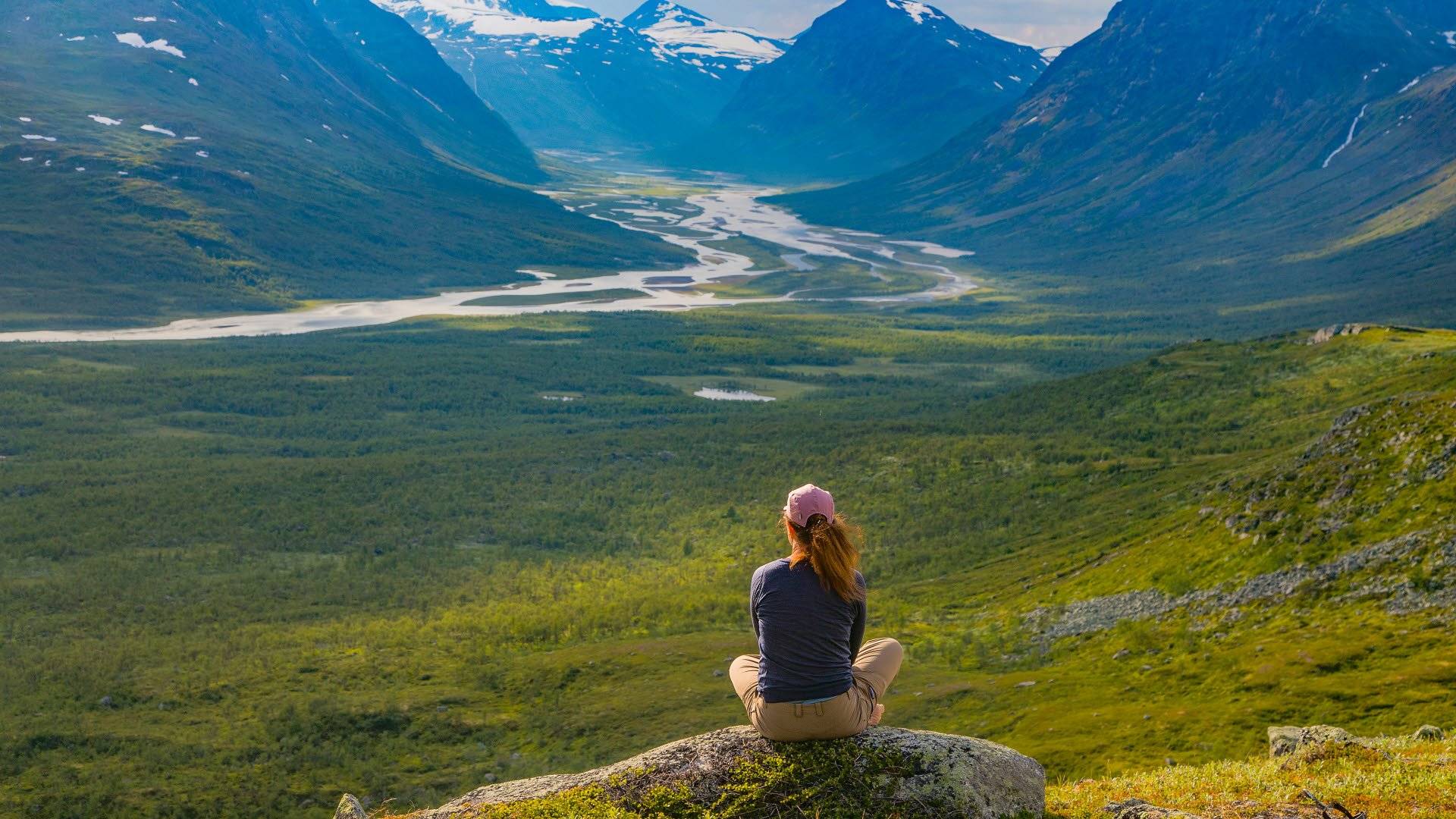
Visit the park
Here you’ll find directions, information about local services, and other useful details to help you prepare for your visit to Sarek National Park.
Visit the park
Here you’ll find directions, information about local services, and other useful details to help you prepare for your visit to Sarek National Park.


Sarek is one of Sweden’s most inaccessible national parks for anyone who cannot hike or ski on their own. There are no roads leading into the national park.
Seasons in Sarek National Park
From darkness to light, from cold to warmth. Here in the north you have the chance to experience the full range of seasonal changes. The Sámi people are often called “the people of eight seasons”, because they divide the year into eight seasons based on changes in nature and the life cycle of the reindeer.
Late winter
In March and April the sun begins to warm more and more. This is when the migratory birds return, and in the Sámi reindeer‑herding communities preparations begin to move the reindeer from the forestlands to the mountain areas in the west, to the summer grazing grounds.
Spring
Spring begins in May. Reindeer calving takes place throughout May. This is a very sensitive period, and the reindeer must not be disturbed.
The sun warms the ground, bare patches appear, and the snow‑covered slopes become increasingly mottled. Usually, the period called förfallotiden begins in mid‑May, when it is difficult to travel in the landscape. Streams open up and the ice becomes weak and unsafe to travel on. Some years the snow melts quickly; in others it takes longer.
Early summer
By the end of June, almost all the snow has melted in the mountains. The last ice disappears from the mountain lakes, and the spring floods run fast and strong. At this time of year the reindeer need peace and quiet to regain strength. The Sámi communities repair enclosures and fences in preparation for the summer’s reindeer herding. This is also when the first juopmun (mountain sorrel) can be picked. Higher up on the mountain peaks, snow often remains. The first calf‑marking begins.
If it has been a late spring and the snowmelt has started late, snow may still remain, the ground can be wet, and the streams may be swollen with meltwater. This can make mountain hiking difficult and make it hard to ford fast‑flowing streams.
Summer
It is July and the mosquitoes have arrived—now it is summer. The nights are still as light as the days. The ground begins to dry and the vegetation grows quickly. Calf‑marking continues and, towards the end of the month, cloudberries begin to ripen. The summer settlements fill with people, and in some of them you may be able to buy fresh bread and smoked fish. July is the high season for hiking tourism in the mountains.
Late summer
In August, late summer begins. Now is the time for berry picking, fishing and gathering winter fodder. The reindeer begin to move in search of fungi and to build up strength for winter. The first cold nights arrive, and nature begins to slow down, with the first yellow leaves appearing. The evenings grow darker and colder.
August is often a wonderful time for hiking, with fewer mosquitoes and clear air.
Autumn
With autumn comes cooler air and nature turns red and orange. In the forests, lingonberries have ripened. The mountain tops turn white. Ptarmigans can be heard again and get their first white feathers. It is the season of hunting and reindeer slaughter, and preparations for winter herding begin. During autumn the weather is often fine, but nights can be cold.
Late autumn
Late autumn begins in October, and the first snow usually arrives. Bears go into hibernation, and the Sámi communities begin gathering the reindeer to divide them into winter groups. The reindeer are moved to winter grazing areas in the forestlands, and slaughter of winter meat reindeer takes place.
This period is again called förfallotiden, when travel is difficult until everything has frozen and snow covers the ground. During this time, and during winter, the weather in the mountains is often harsh, and other periods are better suited for visiting Sarek.
Winter
This is the longest and darkest season. Snow has covered the ground. Winter lasts from December well into March. If you are travelling on skis now, there are only a few hours of daylight. The days are short and blue, and the northern lights and the white snow brighten the long, dark winter nights. The weather is harsh, with severe cold, strong winds and heavy snowfall.