
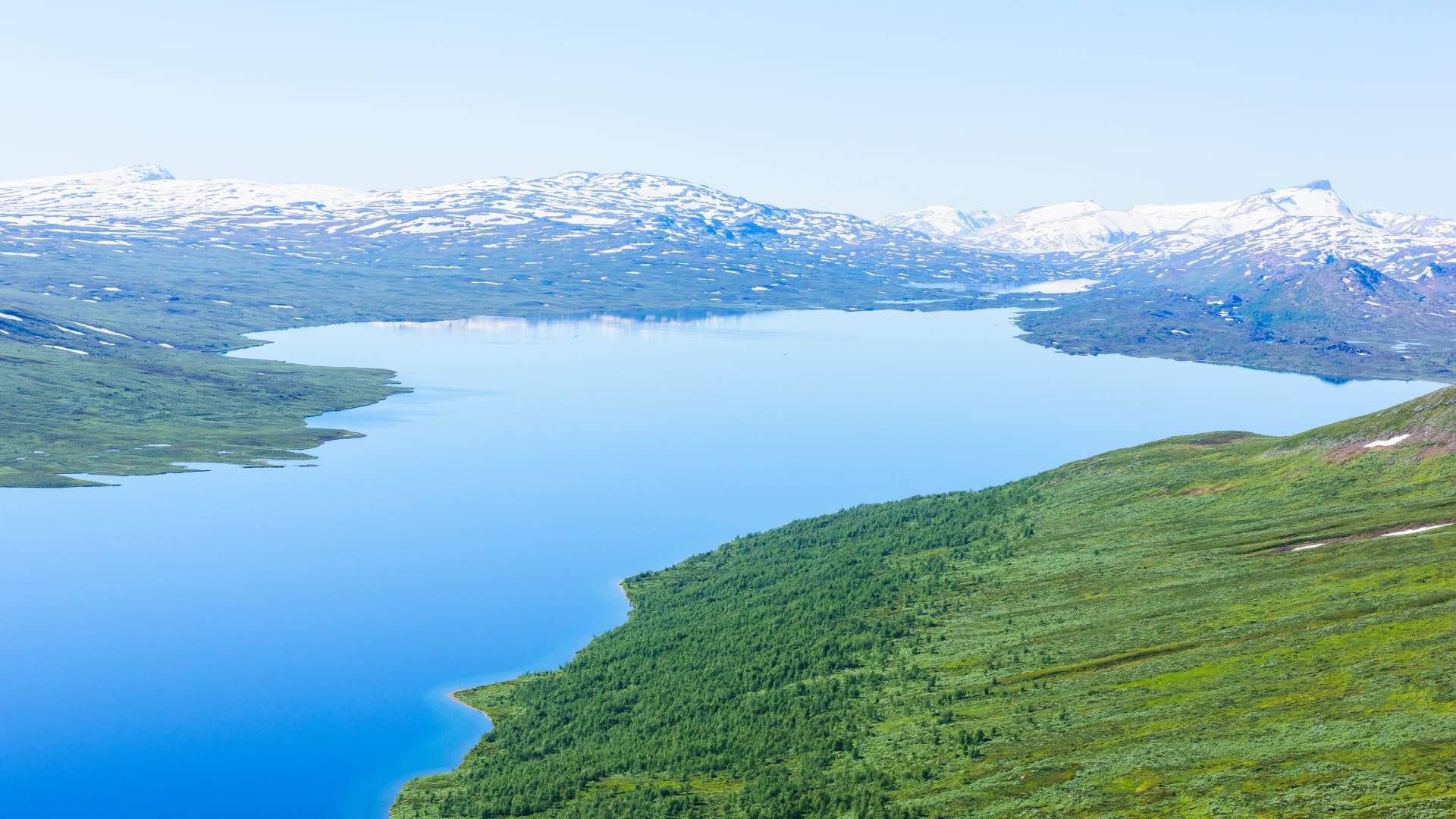
Visit the park
Here you’ll find directions, information about local services, and other useful details to help you prepare for your visit to Padjelanta/Badjelánnda National Park.
Visit the park
Here you’ll find directions, information about local services, and other useful details to help you prepare for your visit to Padjelanta/Badjelánnda National Park.


Padjelanta/Badjelánnda is the most remote place in Sweden in relation to public roads. To enter the national park, you must hike, ski, or travel by one of the scheduled helicopters operating the route Rijtjem/Ritsem – Stáloluokta – Huhttán/Kvikkjokk.
There are no accessible entrances or adapted trails for visitors using wheelchairs or similar mobility aids.
Dry toilets are available at the cabin sites along the Padjelanta-/Badjelánndaleden trail.
Seasons in Padjelanta/Badjelánnda National Park
The cabins along Padjelanta-/Badjelánndaleden are open year‑round. In winter, at least one cabin in each cabin site remains open. In summer, the cabin sites are staffed with hosts.
Late winter
In March and April, the sun begins to gain strength. Migratory birds return, and in the Sámi reindeer herding communities preparations begin for moving the reindeer from the forestland to the western mountains—their summer grazing grounds.
Spring
Spring begins in May. Reindeer calves are born from late April through May. This is a sensitive period, and the reindeer must not be disturbed. The sun warms the slopes, patches of bare ground appear, streams open up, and lake ice becomes weak.
From mid‑May, the period known as förfallotiden usually begins—when travel is difficult. Streams open and ice weakens, making the terrain unsafe. In some years the snow melts quickly; in others it lingers much longer.
Early summer
By late June, most of the snow has melted in the mountains. The last ice disappears from mountain lakes and the spring floods are at their peak. At this time of year, reindeer need peace and quiet to regain strength. Sámi communities repair reindeer enclosures and fences in preparation for summer herding. This is also when the first juopmu (mountain sorrel) can be picked. Higher up on the peaks, snow may still remain. The first calf marking begins.
If the spring has been late, snow and meltwater may still make hiking difficult, and streams may be too strong to cross safely.
Summer
In July, the mosquitoes arrive—and summer is in full swing. Nights are still as bright as days. The ground begins to dry, and vegetation grows rapidly. Calf marking continues, and towards the end of the month cloudberries begin to ripen. Sámi summer settlements fill with people, and in some you may be able to buy fresh bread or smoked fish. July is the high season for mountain hiking.
Late summer
In August, late summer begins. This is the time for berry picking, fishing and gathering winter fodder. Reindeer begin to move in search of fungi and to build up strength for winter. The first cold nights arrive, leaves start turning yellow, and evenings grow darker and cooler.
August is often a wonderful time to hike: fewer mosquitoes and clear, crisp air.
Autumn
As autumn arrives, the air grows cooler and nature turns red and orange. Lingonberries ripen in the forests. In September, the week known in Sámi as lastaváldinvahkku—“when the wind tries to tear the leaves from the trees”—arrives. Snow dusts the mountaintops, ptarmigans call again and begin to grow their first white feathers. It is the season of hunting and reindeer slaughter, and preparations for winter begin.
Hikers usually experience beautiful weather but cold nights.
Late autumn
Late autumn begins in October, when the first snow typically falls. Bears go into hibernation, and the Sámi communities start gathering the reindeer to separate them into winter groups. The reindeer are moved to forestland for winter grazing, and the slaughter of winter stock takes place.
This period is again called förfallotiden, when travel is difficult until everything has frozen and snow covers the ground. The weather can be harsh, with frequent storms.
Winter
Winter is the longest and darkest season. Snow covers the ground, and winter lasts from December well into March. Ski travellers have only a few hours of daylight. Days are short and blue‑tinged, while the northern lights and white snow light up the long, dark nights. Weather is often severe, with intense cold, strong winds and heavy snowfall.